|
Handyside's Fountain |
|||
|
|
|||
|
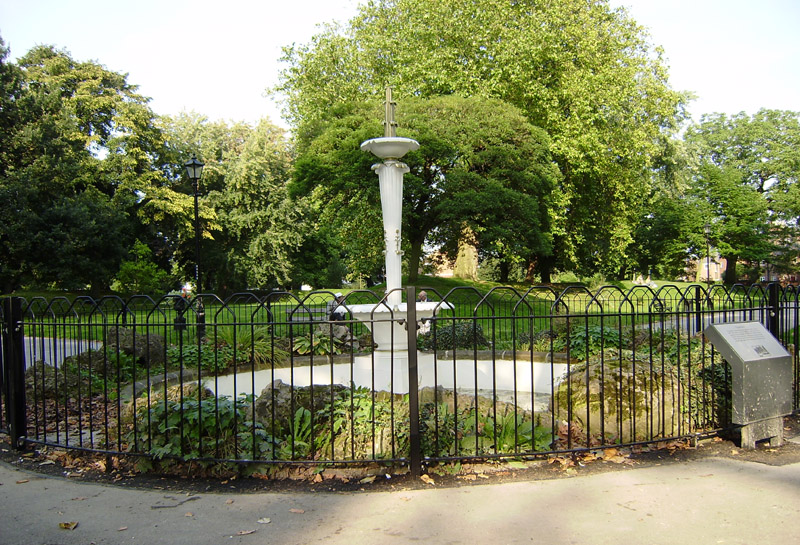
NEW RAILINGS AROUND THE FOUNTAIN The Parks Department have now installed specially made railings around the fountain. These are identical to the original Victorian railings removed during the 1950s/60s. Previous railings included plain rails and a high enclosure to a foot rail at ankle height, which was the cause of recent damage. The new railings were installed around Sept 15-18 2008. |
|||
| Loudon's
original plan had a statue standing here at the point where the four main
straight pathways converge.
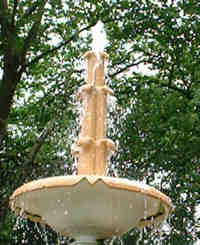
During the first few years of the New Arboretum's life, members of the public, through a press campaign, had asked for some kind of water feature for the gardens. This campaign resulted in the Committee commissioning a fountain for the Arboretum. The original fountain, erected in 1846,1 (three years after Loudon's death and two years after Strutt's death) was damaged at some time around the mid 20th century, resulting in the loss of the entire section above the bowl. The fountain, one of a number of similar fountains around the UK, was made by Andrew Handyside (famous for the construction of Friargate Railway Bridge).
(1 Derby Mercury, August 1846) Photograph: Chris Harris July 2002 |
|
||
|
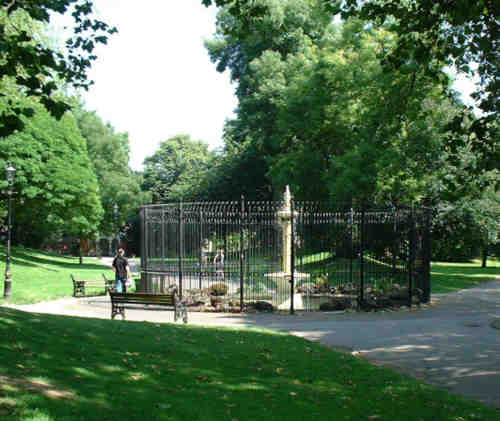
Above: Railings were installed to protect the reconstructed fountain from vandal attacks. These railings have now been removed and replaced by a foot rail, unfortunately this has resulted in damage to the refurbished fountain. The CCTV has proved ineffective as a deterrent to misuse of the fountain |
||
|
|
|||
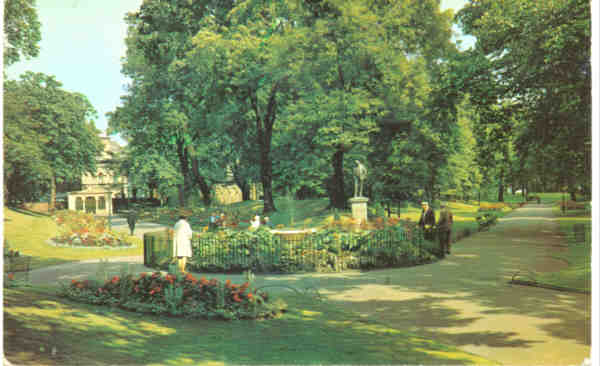
| Above:
A postcard showing the base of Handyside's fountain and Sir F Henry
Royce's statue at around 1960
Photo Postcard courtesy of Margaret and Laurie Webster |
|||
 |
|||
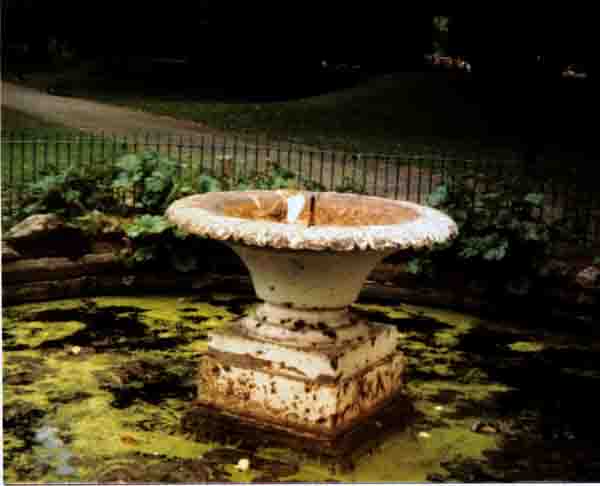
| This
was the sorry state of the fountain in 1989
David Morley 1989 |
|||
|
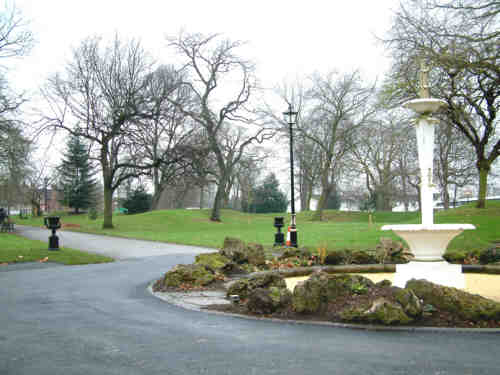
Right: the railings have been removed ready for a low rail to be installed. The urns have also been replaced next to the path junctions Photograph: Chris Harris December 16th 2004
|
|
||
|
More Structures and Ornamentation The Fountain |
After studying
old photographs of the original fountain, the Parks Department were able to
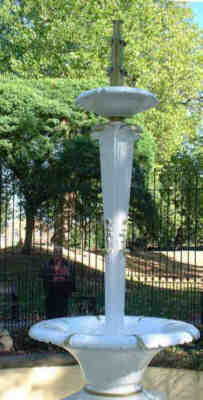
arrange for a reconstruction of the fountain (1998/1999). It was deemed
necessary to enclose this within a circle of railings to protect it from
vandals.
On completion of the refurbishment project the railings were removed, resulting in further damage to the fountain. Before the fountain was damaged since restoration it was kept running on most days, the sound of running water created a restful atmosphere. Closer inspection of old photos has indicated that further modifications are required to create the same effect as the original fountain (see photo of water jet below). |
||
|
ove the mouse pointer over the photo on the right to compare the water fountain jet used in the original fountain with the system used in the reconstructed fountain. |
|
||
|
Right: The Fountain - re-painted September 2003 Move your mouse pointer over the photo on the right to compare the new fountain with the original |
 |
View Old photos of the Fountain Old photos courtesy of Derby Parks Dept. For more old photos of the fountain, see Derby Arboretum's |
|
|
Investigation into how the fountain worked |
|||
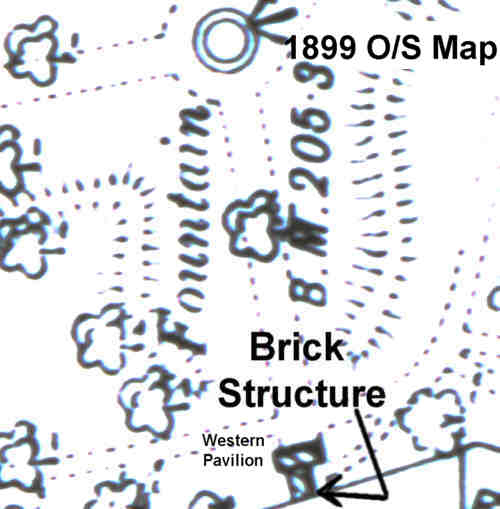 |
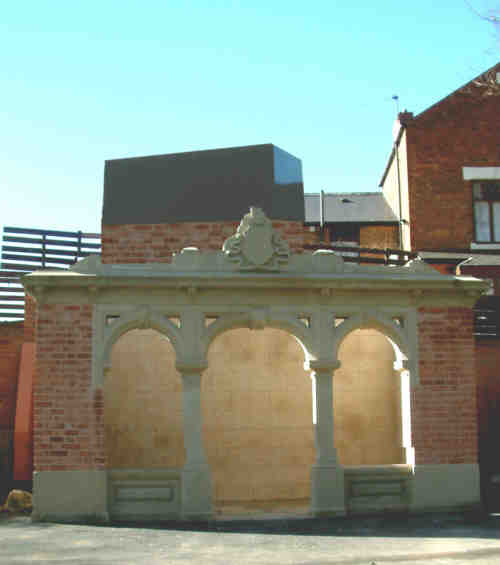
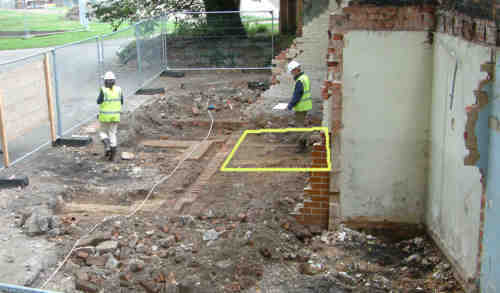
Left is a map (1899) showing a structure at the rear of the West Pavilion. Right: How the water tank may have looked This structure was discovered by the Archaeologists but had no apparent purpose until having a discussion over the phone with former Arboretum ranger, Michael Allen, who informed me that the fountain pond had an overflow allowing a constant flow of water through it.. We discussed the need for a head of water to feed the fountain and this is the only possible location for a tank (digital image -right), it is above the fountain head and easy to supply water from the high ground on Harriet Street. |
 |
|
| Right: The
rectangle at the rear of the excavated foundations did not appear to have
a purpose until the map (above) revealed the structure.
Clay pipes led from here in the direction of the fountain. |
 |
||
| Christopher Harris 2005 | Top of Page |
Free JavaScripts provided by The JavaScript Source |
|